Two related problems
Snow load
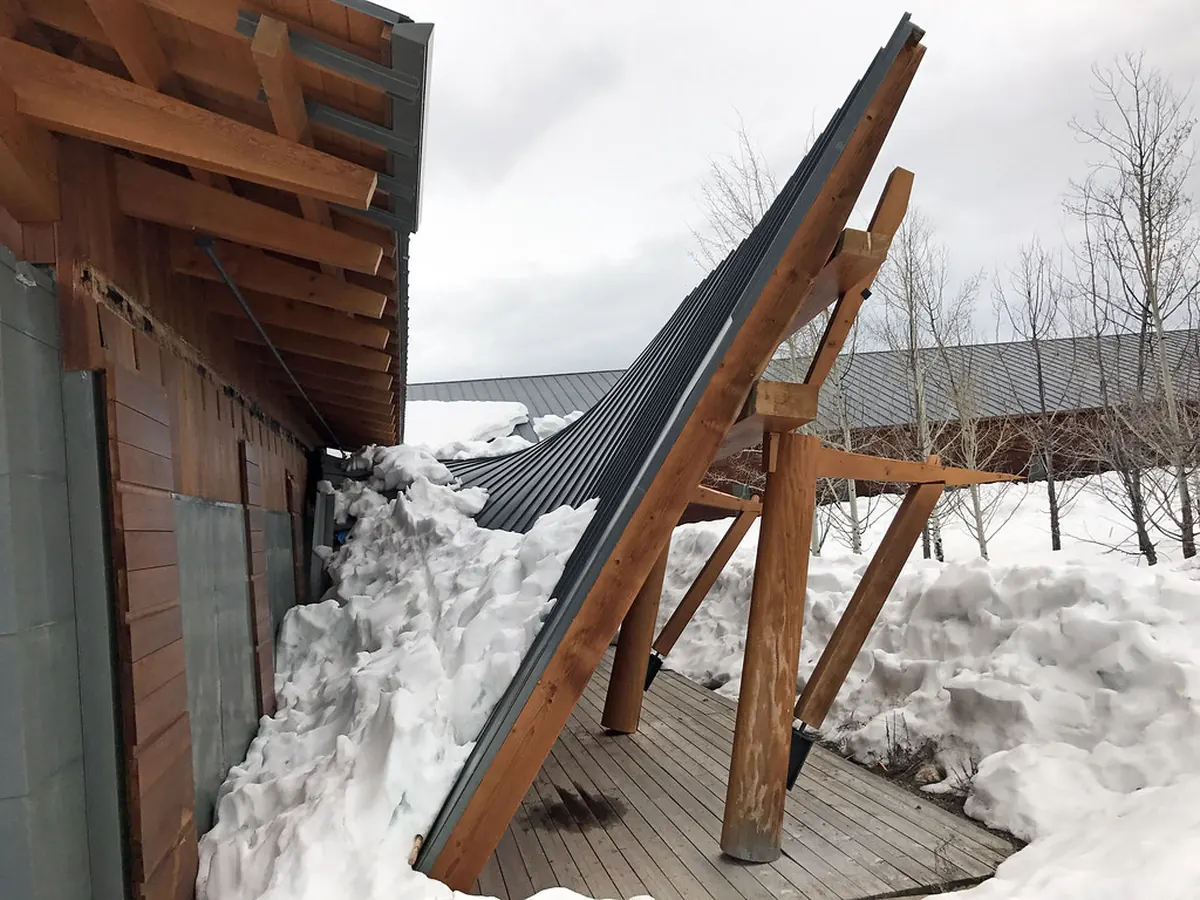
Weight of ice, snow or sleet is a named peril in many homeowner forms. Fresh powder is light, but settled snow, rain-on-snow and ice can weigh several times as much per inch. Drifts against higher walls, valleys and sliding snow from upper roofs concentrate the load. Damage ranges from cracked drywall and sticking doors to sagging rafters, broken trusses and full collapse of carports, garages and shops.
Ice dams
Heat escaping through the roof melts snow, which refreezes at the cold eaves. The ridge of ice traps meltwater that then runs under shingles and into the walls and ceilings. Ice dam damage often shows up weeks later as stains, wet insulation or mold.
Why these claims grow
- Structural damage hidden behind finished ceilings is easy to miss on a first inspection.
- Wet insulation and vapor barriers need removal, not just drying.
- Emergency snow removal and shoring are often under-reimbursed.
- Repairs may trigger current building code requirements for framing and insulation.
- Winter repair conditions add heat, enclosure and protection costs.
How we approach it
We document deflection, measure framing members and photograph the attic and interior. Where structural questions exist, we recommend an engineer and incorporate the findings into the estimate. Our free roof snow load calculator helps owners understand how much weight their roof was carrying.
Frequently asked questions
Is snow load damage covered?
Many homeowner policies list weight of ice, snow or sleet as a covered cause of loss, sometimes with limits for certain structures like awnings, fences or pools. Read your form.
Should I remove the snow before the adjuster comes?
Safety comes first. If the roof is at risk, remove the load and photograph everything before and after, including measurements of snow depth.
The damage appeared in spring. Is it too late?
Report it promptly once discovered. Late discovery is common with ice dams, but notice requirements in the policy still apply.