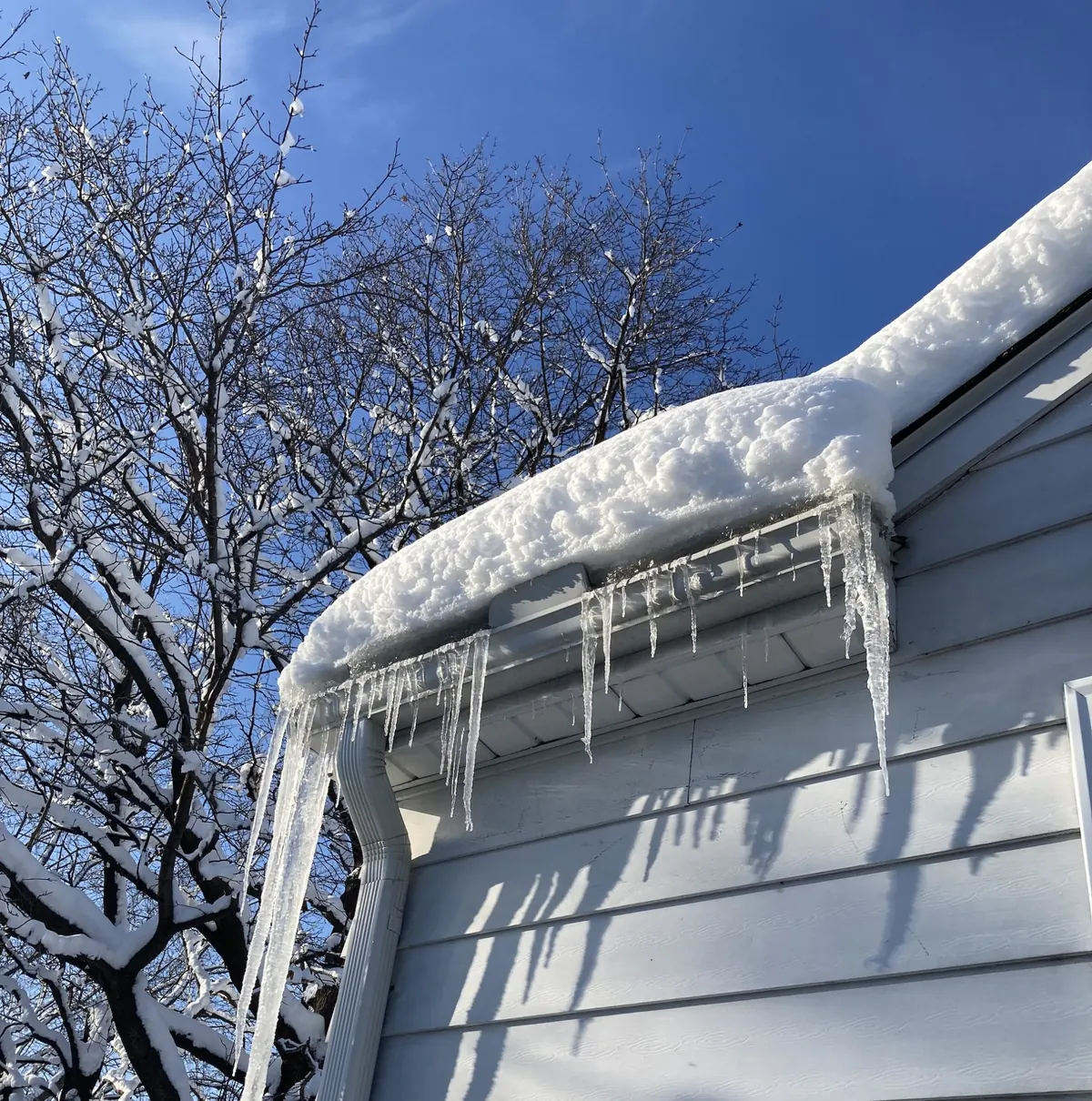
Snow load and ice dam claims have a timing problem. By the time damage is obvious, the snow that caused it may be gone. Here is what to record while it is still there.
Record the snow
- Photograph the roof from several angles, including drifts and valleys.
- Measure depth in a few places with a ruler or yardstick in the photo.
- Note the type of snow: powder, settled, wet or ice layers.
- Record the date and recent weather, such as rain on snow.
Our roof snow load calculator turns those measurements into an estimated load.
Check inside
- Look for new cracks in drywall, especially near the ceiling.
- Check doors and windows that suddenly stick.
- Look in the attic for wet insulation, frost or bent framing.
- Photograph stains and leaks as they appear.
Keep receipts
Snow removal, shoring, heat tape, temporary tarps and drying equipment may be reimbursable as reasonable steps to protect the property. Keep receipts and photos of the work.
Costs that are often missed
- Removal and replacement of wet insulation and vapor barrier
- Framing repairs found only after opening ceilings
- Code-required upgrades during structural repair
- Winter conditions: heat, enclosure and protection
Maintenance arguments
Insurers sometimes argue that ice dams result from poor ventilation or insulation. Whether that affects coverage depends on the policy. Once coverage is accepted, appraisal can help resolve the amount.